Peace Among Nations: History, Gandhi and Global Travel

For much of my childhood, stories of war, military service, and sacrifice were part of my understanding of the world. My maternal grandfather served in the Army during World War I, my father was a Marine, and many of my relatives and friends have served or continue to serve our nation. Yet while these stories were familiar, my own experiences unfolded within the relative security of an American economy and society shaped by the sacrifices of generations before me. I understood, within the capacity of a child, that freedom and security were things to appreciate. What I could not yet fully comprehend was the extraordinary human cost of establishing them, or the responsibility that comes with inheriting their benefits.
With adulthood has come a different depth of gratitude, one informed not only by what I was taught but by what I have experienced, witnessed, and come to understand. The freedoms we exercise, the opportunities we pursue, and the security we can so easily take for granted did not emerge without struggle. They were shaped by people who served, resisted injustice, negotiated, rebuilt, and sometimes gave their lives in pursuit of a future they would never experience themselves. I have come to recognize that peace is not simply an achievement we inherit. It is a responsibility entrusted to each generation, requiring continued care, accountability, and, at times, further sacrifice. When we fail to preserve its foundations, the cost of restoring what has been lost may be greater still.
History offers repeated reminders that the end of a war does not necessarily mark the beginning of lasting peace. The First World War was followed by an ambitious effort to establish international cooperation through the League of Nations, an institution intended to prevent future conflicts through diplomacy and collective security. Yet within a generation, the world was engulfed in another devastating war. The consequences of these conflicts extended far beyond military casualties and territorial disputes. Families were separated, economies destabilized, communities destroyed, and generations were left to rebuild lives shaped by decisions made far beyond their control.
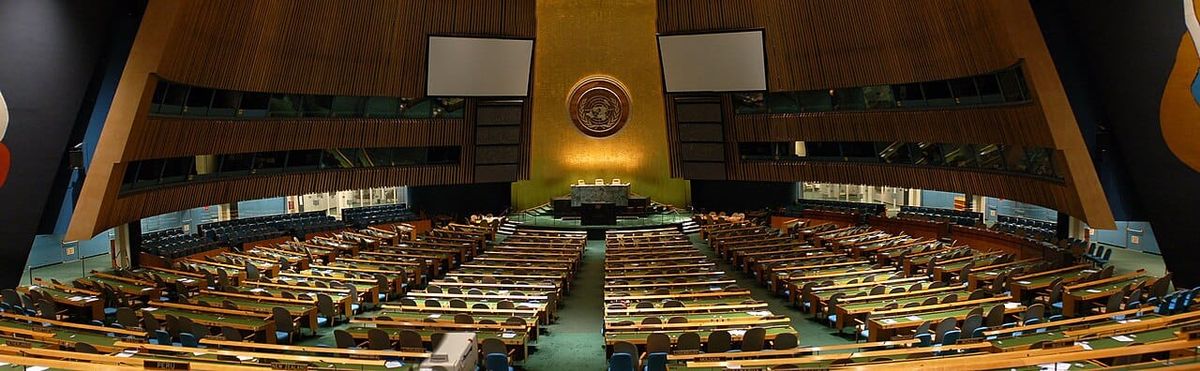
Out of the devastation of the Second World War came the United Nations, established in 1945 with a commitment to preventing future generations from enduring the suffering of war. Its founding Charter articulated principles of sovereign equality, peaceful resolution of disputes, international cooperation, and respect for human rights. These were not simply diplomatic aspirations. They represented an effort to transform the lessons of human suffering into a framework through which nations could address their differences without repeatedly resorting to violence. The United Nations was never intended to eliminate the distinct interests, identities, or political systems of its member states. Rather, it sought to establish common responsibilities within a world where disagreement would inevitably remain.
More than eighty years later, the question is not whether those principles were worth establishing, but how faithfully they have been maintained. International institutions cannot preserve peace through declarations alone. Their effectiveness depends upon the willingness of nations to honor commitments, exercise restraint, engage in diplomacy, and recognize that the consequences of their decisions extend beyond their own borders. When these responsibilities are neglected, the burden does not fall exclusively upon governments or those directly involved in conflict. It reaches families, businesses, communities, and future generations who inherit the economic, social, and human consequences. Perhaps this is one of history's most difficult lessons: establishing peace requires sacrifice, but preserving it requires something equally demanding. It requires the continued willingness to act responsibly even when immediate interests make doing so inconvenient.
The United States and India offer an interesting comparison in the pursuit of independence and what followed. Both emerged from British colonial rule, yet their struggles unfolded in different centuries and under vastly different circumstances. America declared independence in 1776 and fought a revolutionary war to secure it, while India's independence in 1947 followed decades of resistance, including the nonviolent movement led by Mahatma Gandhi.
Gandhi lived through both world wars and the establishment of the United Nations in 1945, just two years before India achieved independence. His philosophy challenged the assumption that political transformation must depend upon armed struggle, offering an approach rooted in truth, disciplined resistance, and nonviolence. His campaigns demonstrated the capacity of organized nonviolent resistance to mobilize communities, challenge colonial authority, and influence political change, even as the limits of that approach became apparent amid the divisions surrounding independence.
Neither nation's pursuit of freedom was without internal divisions or human suffering. American history reveals the contradiction of people fighting for a shared national purpose while experiencing vastly unequal rights and opportunities. Generations later, Americans of different races and backgrounds would again serve their country during the world wars, even as discrimination persisted at home. Their shared sacrifice did not erase those inequalities, but it demonstrated how a common responsibility could exist alongside profound differences.
India's independence in 1947 unfolded differently. The end of British colonial rule coincided with Partition, dividing British India into two independent nations, India and Pakistan, amid widespread violence and displacement. Gandhi, who had devoted much of his life to nonviolent resistance and the pursuit of unity across communities, witnessed the very divisions he had struggled to overcome.
His assassination in January 1948 ended his personal efforts toward reconciliation just months after India achieved independence. We cannot know how events might have unfolded had he lived longer, nor can we assume his philosophy alone could have resolved the competing political interests and grievances of the time. Yet his life raises an enduring question: how can nations pursue political freedom while also confronting the divisions, competing interests, and historical grievances that threaten the peace they hope to establish?
Independence may change who governs a nation, but it does not automatically resolve the divisions within it or determine how former adversaries will relate to one another in the generations that follow.
History also demonstrates that conflict does not have to determine the future of relationships between nations. The United States and Great Britain, once adversaries in a struggle for independence, eventually developed a close diplomatic, economic, and strategic partnership. India, too, established a new relationship with Britain following independence, one shaped by sovereignty, diplomacy, trade, and continued engagement despite the complexities of its colonial past.
These relationships did not emerge overnight, nor did they erase historical grievances or differences in national interests. They evolved through generations of political decisions, cooperation, and changing circumstances. Perhaps this is an important distinction in our understanding of peace: reconciliation does not require forgetting history, and cooperation does not demand complete agreement.
What matters is the willingness to build something beyond the conflict itself, recognizing that peace is not simply what nations achieve when hostilities end, but what they choose to preserve through the relationships they cultivate afterward.
You may have reached this point and wondered, "What does any of this have to do with travel?" My answer is that it has everything to do with travel. The geopolitical climate directly influences the economic stability of nations, the movement of people, and the opportunities available to the communities we visit. What we are witnessing today is a series of interconnected consequences, where events unfolding in one part of the world can create a domino effect that reaches across continents. Geopolitical conflicts and decisions are among the forces that can alter airline routes, increase transportation costs, disrupt supply chains, place pressure on businesses, and cause travelers to reconsider journeys they once felt confident taking.
For destinations whose economies depend heavily on tourism, the consequences extend into households, local businesses, and entire communities. These connections are not always immediately visible, but they are very real. Travel does not exist separately from the world in which it takes place. It is part of that world. Perhaps understanding this is one more reason to look beyond the destination, appreciate the people who make our journeys possible, and recognize that the preservation of peace is not someone else's responsibility alone.
Plan Your Journey
Travel has a way of revealing more than beautiful places. Sometimes it reconnects us with forgotten parts of ourselves, and other times it reminds us to slow down long enough to notice what’s been there all along.
Whether you’re planning your next adventure or simply gathering inspiration for the road ahead, I’m glad you’re here.