More Than a Marketplace

The first thing you notice is the sound.
Not the conversations between shoppers weaving through narrow aisles or the occasional negotiation between buyer and seller, but the steady rhythm of wood meeting steel. Chisels scrape against rough blocks of wood with practiced precision. Small curls fall to the ground, joining thousands before them until the earth itself is covered in the evidence of patient craftsmanship. There is no urgency here. No performance for visitors. Just men quietly shaping something that, hours from now, will stand on a shelf waiting for someone to admire it.
By the time most travelers arrive at a market in Tanzania, the work is already finished.
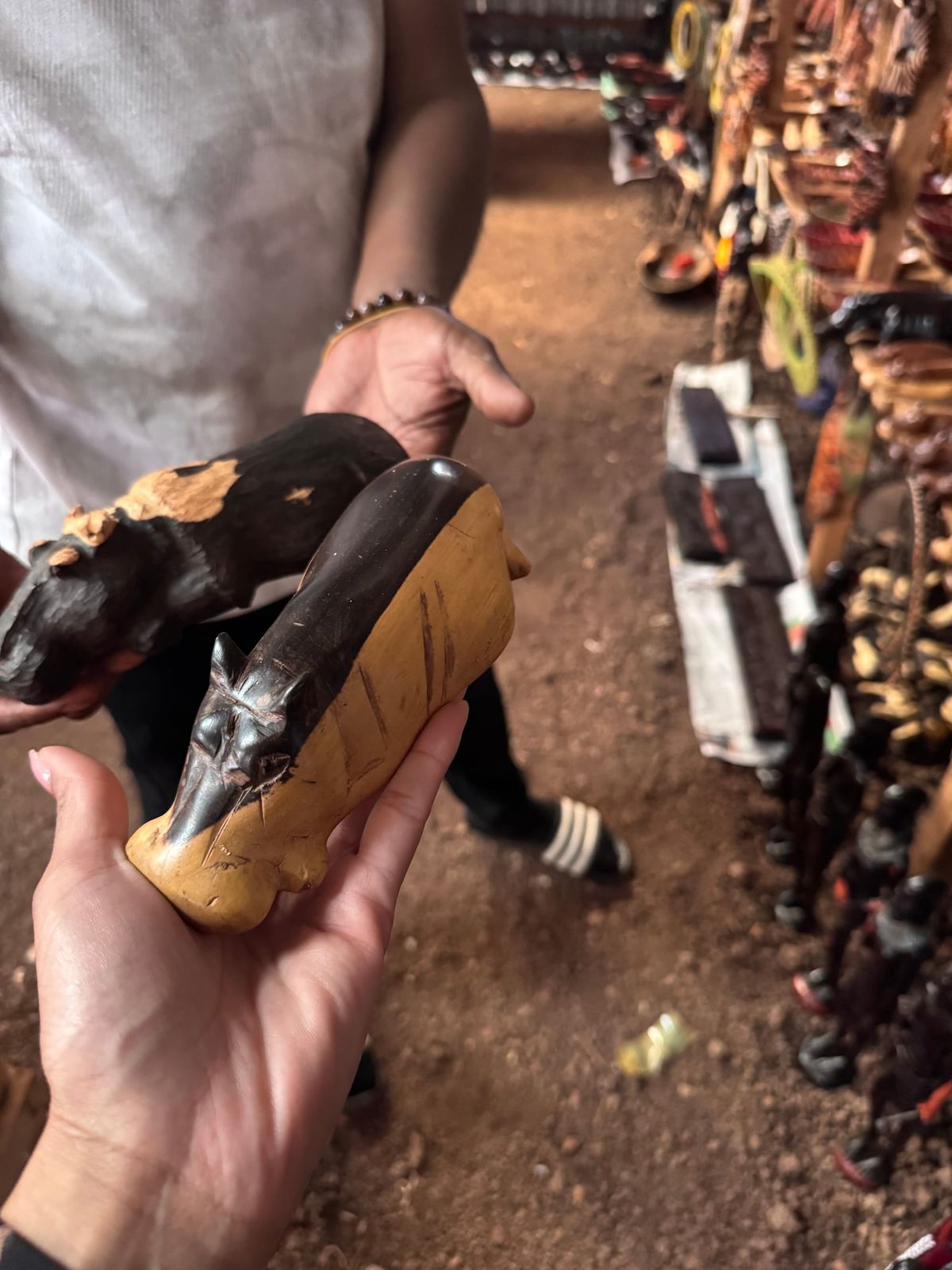
The giraffes stand tall in neat rows, each one slightly different from the next. Elephants march across wooden tables beside rhinoceroses, hippos, and lions polished until they catch the afternoon light. Bright canvases stretch across the walls, telling stories of wildlife, village life, and landscapes that feel familiar even to those seeing them for the first time. Every piece seems ready to become part of someone's home thousands of miles away.
It's easy to admire the finished product.
It's much harder to imagine everything that came before it.
A carved giraffe begins as an ordinary piece of wood. Before it ever reaches a display table, someone has spent hours cutting away everything that doesn't belong. Every curve, every ear, every spot painted across its neck represents time that cannot be rushed. The same is true for the paintings hanging overhead. Before they become souvenirs, they begin as blank canvases waiting for an artist to decide how they want the world to remember this place.
Standing there, I realized the market itself wasn't the destination.
The people were.
Travel often teaches us to chase landmarks. We build itineraries around famous views, celebrated restaurants, and luxury hotels, all of which have their place. I love exceptional hospitality as much as anyone. Yet some of the moments that remain with me the longest happen in places that rarely appear on a travel brochure. They happen when I step away from the polished experience long enough to see the people quietly preserving it.
That is where travel begins to change.
Not because purchasing a carving somehow transforms a community overnight. Reality is more nuanced than that. Rather, because choosing to slow down changes the traveler. When you stop asking, "How much does this cost?" and begin asking, "Who made this?" the object in your hands becomes something entirely different. It is no longer simply décor for a bookshelf or a gift waiting to be wrapped. It becomes evidence of someone's skill, patience, livelihood, and tradition.
Luxury is often associated with exclusivity, rarity, and price. Those things certainly exist, but I have come to believe there is another kind of luxury that cannot be measured on a receipt. It is the luxury of understanding where something came from. Of meeting the person whose hands shaped it. Of carrying home not only an object, but the memory of the conversation that accompanied it.
Perhaps that is why I lingered longer than I expected.
I found myself watching the carvers more than the carvings. I noticed unfinished sculptures scattered around the workshop alongside piles of wood shavings that would eventually be swept away without a second thought. Those scraps told their own story. Every masterpiece leaves behind evidence of the work required to create it. We rarely see that part, yet it is the part that gives the finished piece its meaning.
When I look at the carvings I brought home, I don't first remember the market.
I remember the workshop.
I remember the sound of carving tools echoing through the open air. I remember men focused on their craft with little concern for whether anyone was watching. I remember understanding that what I was witnessing wasn't simply commerce. It was continuity. Skills passed from one generation to the next, quietly ensuring that a piece of Tanzania's artistic heritage would continue long after I returned home.
That may be the greatest souvenir travel has ever given me.
Not the objects themselves, but a different way of seeing them.
Because every destination has beautiful places.
The destinations that stay with us are the ones where we begin to notice the people who make those places possible.
The sound of chisels on wood is the heartbeat of the marketplace, where generations of craftsmanship take shape one carving at a time.
Ready to experience travel with greater intention?
Explore curated journeys or begin planning your next adventure with ThetravelingTrendie.


